
Criminal Cases in the Sutter County Courts
Felony and misdemeanor prosecutions in Sutter County go to the Superior Court of California, County of Sutter. There is no separate municipal criminal court. The courthouse at 1175 Civic Center Boulevard in Yuba City houses the Traffic/Criminal Processing Division and the clerk functions tied to these files. The criminal line is 530-822-3306. Questions about a court date may also go to Traffic/Criminal Processing at 530-822-3303 from 8:30 a.m. to 4:30 p.m.
The clerk keeps the filed complaint, docket entries, hearing record, orders, judgment, and copy request channel. An arresting officer creates a report, and the jail may create a booking record, but neither document proves what the prosecutor filed or how the Sutter County criminal case ended. The court file is the sound source for that answer.
The court location and contact page shows the public courthouse details used for record access.
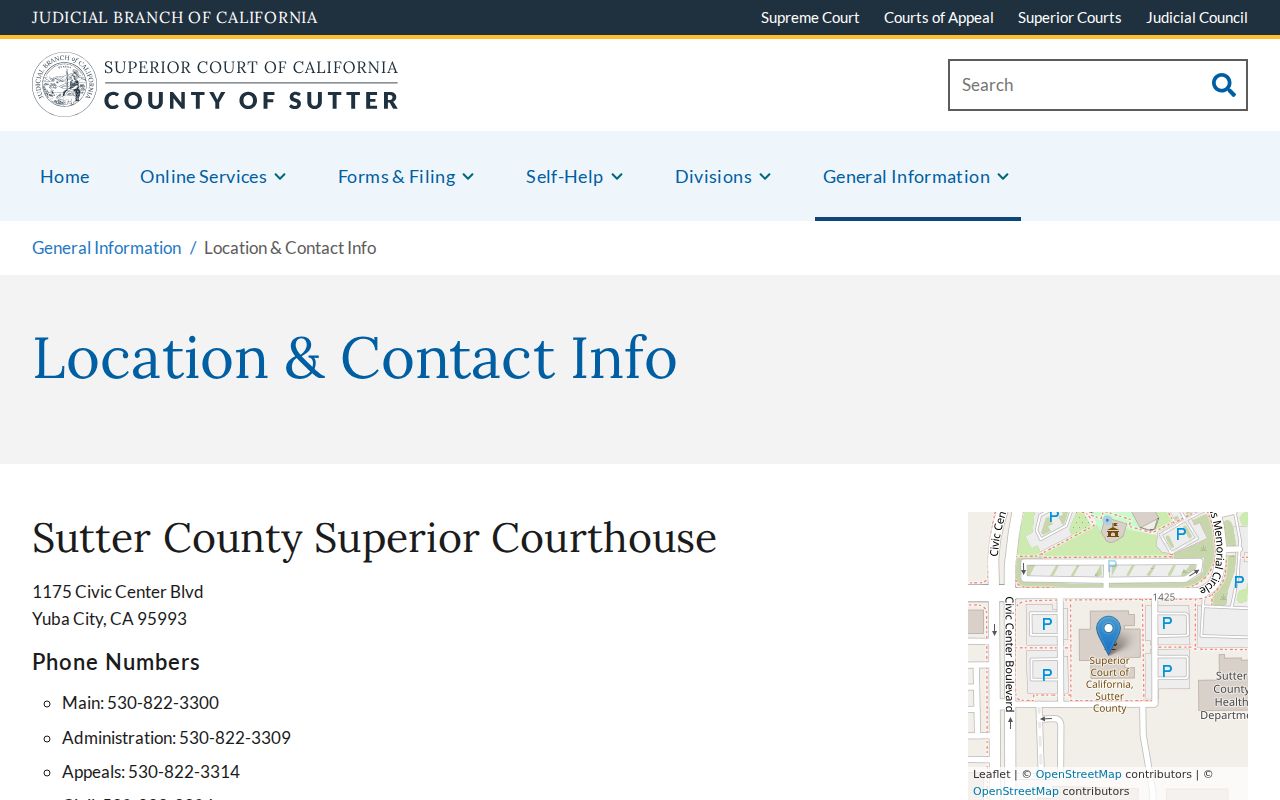
That official listing helps a requester reach the court division that holds the Sutter County criminal case file.
Sutter Criminal Cases Since 2008
The Sutter Superior Court Online Case Access page states that its records portal covers current cases and completed cases dating back to 2008. Registration is not required. A user can view case information and scheduled hearings, purchase document copies, and pay criminal or traffic fines and fees. This local portal matters because California does not provide one statewide public search for all Superior Court criminal dockets.
Online coverage is a starting point, not a claim that every public document is shown. Sealed or confidential matters will not appear like ordinary public files. A case may also require clerk help when its age, indexing, or document format puts it outside normal web access.
The judicial officers page identifies the judges assigned to Sutter County court work.
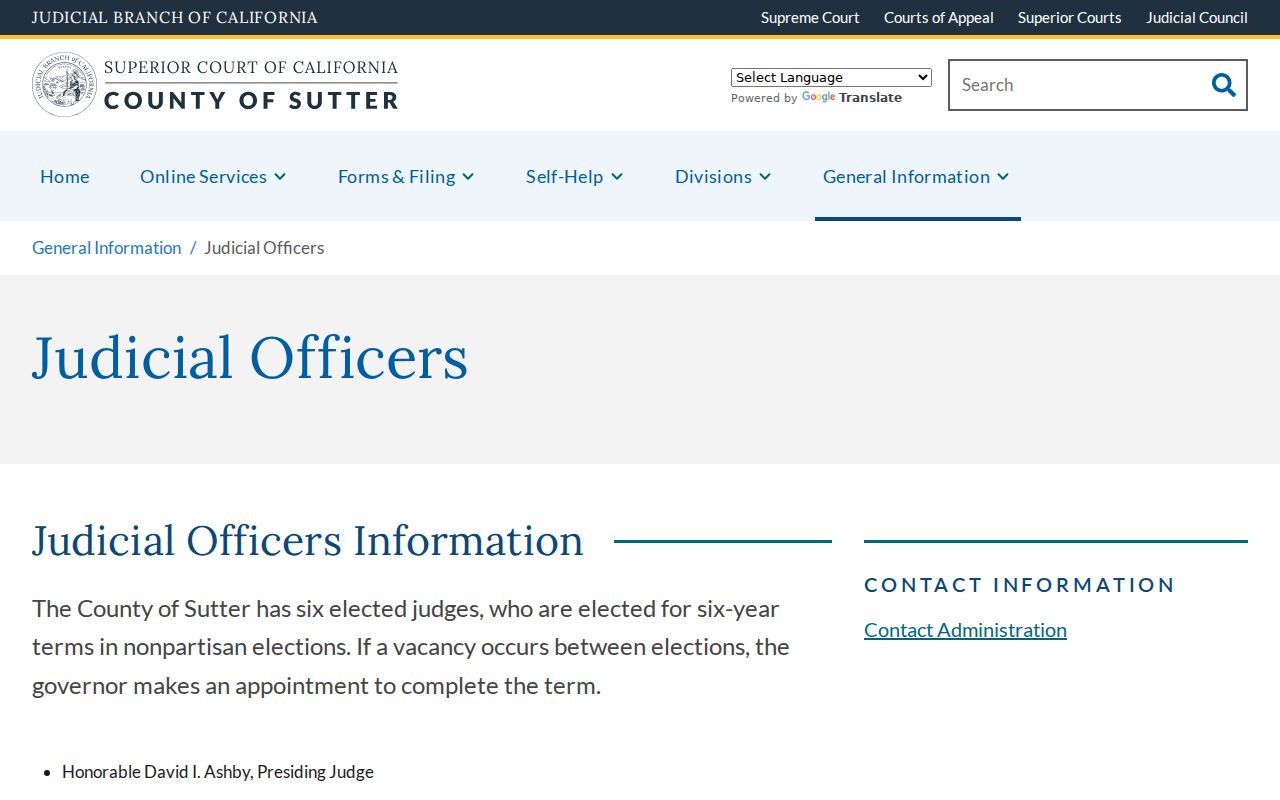
Judicial assignments give useful context when a docket or calendar lists a department or hearing officer.
How to Search Case Records
Use the official Sutter County channels in a set order. The portal works best for a current or post-2008 file. The seven-day calendar answers a narrower hearing question. The records request form reaches files and copies that the portal does not supply.
- Open the Sutter court Online Case Access page and follow its link to the records portal.
- Use the case details available in the portal and confirm the result is a Sutter Superior Court criminal matter.
- Review case status, hearings, and docket context before treating any charge as final.
- Check the court calendar when the main need is a hearing set today through the next seven days.
- Submit the Records Request form for copies, certification, an older file, or inadequate online access.
| Field Label | Type | Required | Notes |
|---|---|---|---|
| Case search fields | Portal controls | Not stated | Exact labels were not exposed in the official crawl. |
| Case coverage | Information | N/A | Current and completed cases back to 2008. |
| Registration | Account rule | No | The court says no registration is required. |
| Portal actions | Links and buttons | N/A | View case data and hearings, buy documents, or pay fines and fees. |
Sutter Case Calendar or Portal
The two online tools answer different questions. The case portal follows a file across its life. The Sutter court calendar is updated through the day and covers hearings set for today through the next seven days. A calendar hit can confirm an upcoming setting, but it is not a substitute for the full docket, filed document, or final judgment.
The official calendar page also points to the online case docket.
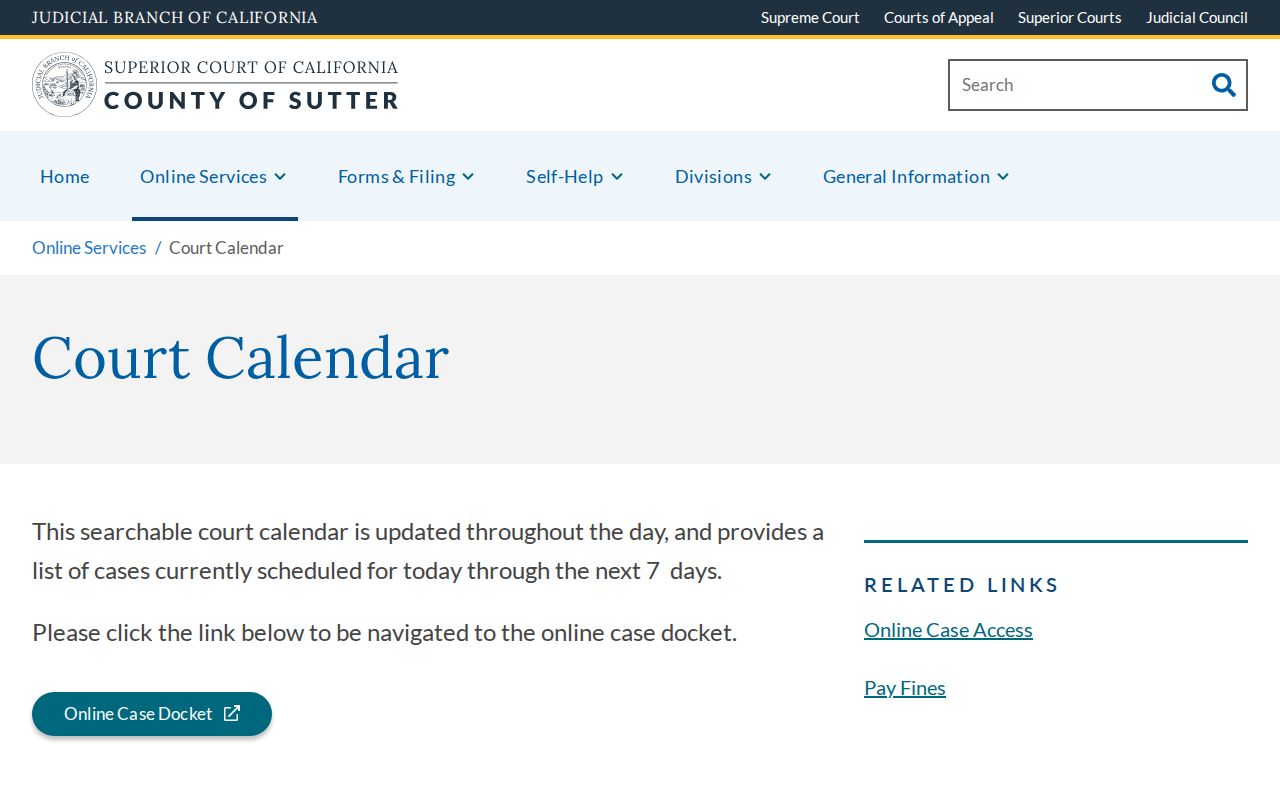
Using both views reduces the risk of mistaking a near-term hearing entry for the full Sutter County criminal court record.
Note: A court date can change, so confirm time and department in the current Sutter County court source.
What the Case File Shows
A Sutter County criminal case file may show the path from accusation to outcome. The precise public fields vary by case and access level, so the safest reading joins the docket with the filed documents that matter. A charge line alone is not a conviction, and a hearing entry alone does not state the result.
| Case Number & Court | Connects events and documents to the Sutter Superior Court file. |
|---|---|
| Charging Document | States the counts the prosecutor filed, which may differ from booking charges. |
| Docket Entries | Chronological filings, hearings, orders, pleas, and other case events. |
| Hearing Dates | Past or scheduled appearances and their court setting. |
| Disposition & Judgment | Shows whether counts ended in conviction, dismissal, acquittal, or another result. |
| Sentence & Conditions | May record custody, supervision, fines, restitution, or court orders. |
For case understanding, focus on the latest disposition for each count. One Sutter County case can contain several charges with different results.
Older Sutter Criminal Case Requests
When the portal is not enough, use the Sutter court Records Request form. It asks for requester contact and mailing details, a case number if known, a description of the material, and whether a certified copy is wanted. The court posts a processing window of one to four weeks. It instructs users not to send payment with the first web request because staff will make contact after completion if fees apply.
Plain copies cost $0.50 per page. Certified copies cost $40 plus the per-page charge. For a case dated before 1994, the court may charge $15 per name when the archive search takes more than ten minutes. Those rules make a narrow request valuable: give the known party, case number, date range, and exact document instead of asking the clerk to infer the goal.
The official request page displays the route and fee notice.
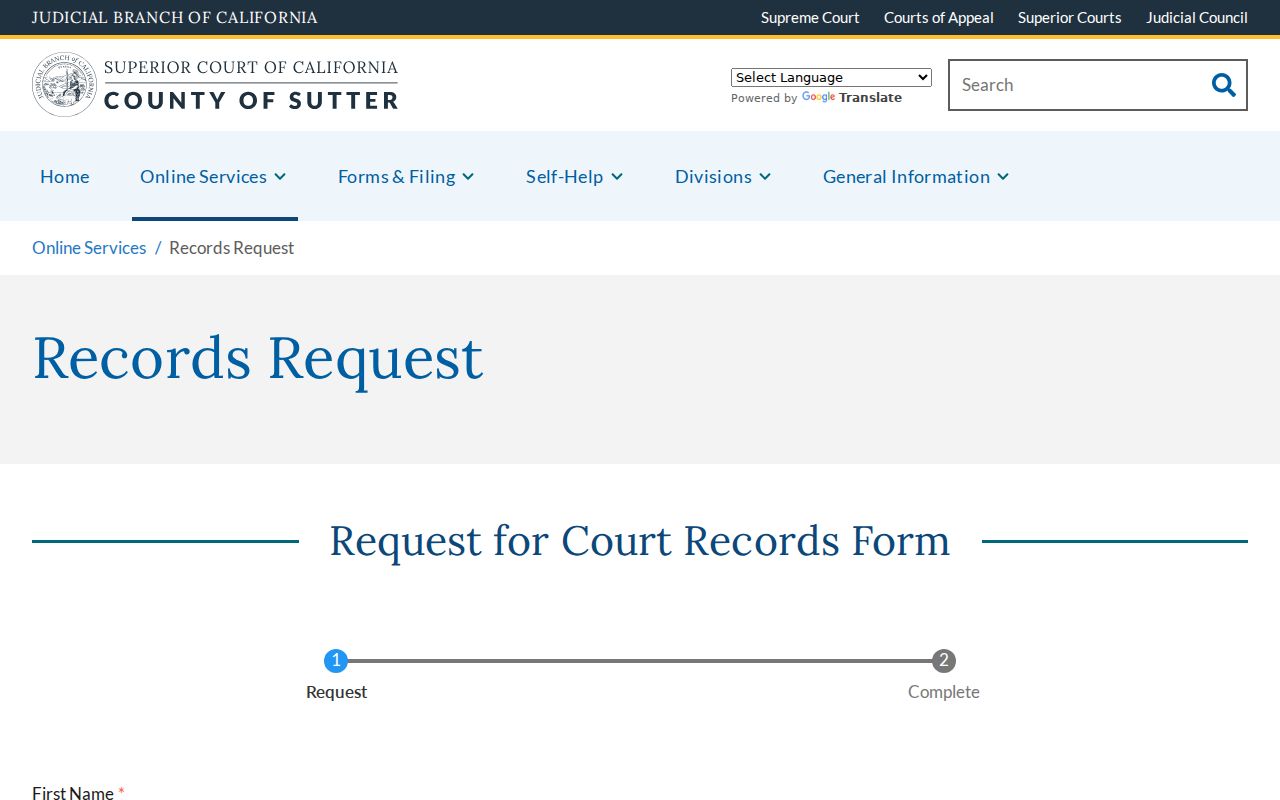
This form is the direct fallback for certified documents and Sutter County criminal case material that is missing online.
Stages of a Criminal Case
A local investigation or arrest can reach the District Attorney for review. The prosecutor then decides whether to file a complaint and which charges to allege. At arraignment, the court addresses charges, rights, and plea. Pretrial work can include motions and, in a felony, a preliminary hearing. A plea or trial leads toward disposition; sentencing follows a conviction. Sutter County's criminal division notes that once a complaint is filed, the clerk may advance the initial appearance date but cannot postpone it.
Case flow: Charges Filed › Arraignment › Pretrial › Plea or Trial › Disposition › Sentencing
The court docket, rather than a jail listing, shows where the Sutter County criminal case sits in that flow.
Sutter Criminal Processing Desk
The criminal division is more than a web portal. It is the local point for criminal processing and schedule questions. The official criminal division page explains its court-date rule and links readers to the proper channels. A person trying to understand their own case should use the case number when calling and ask whether the issue concerns a filing, date, payment, copy, or clerk action.
The division's published page shows those local instructions.
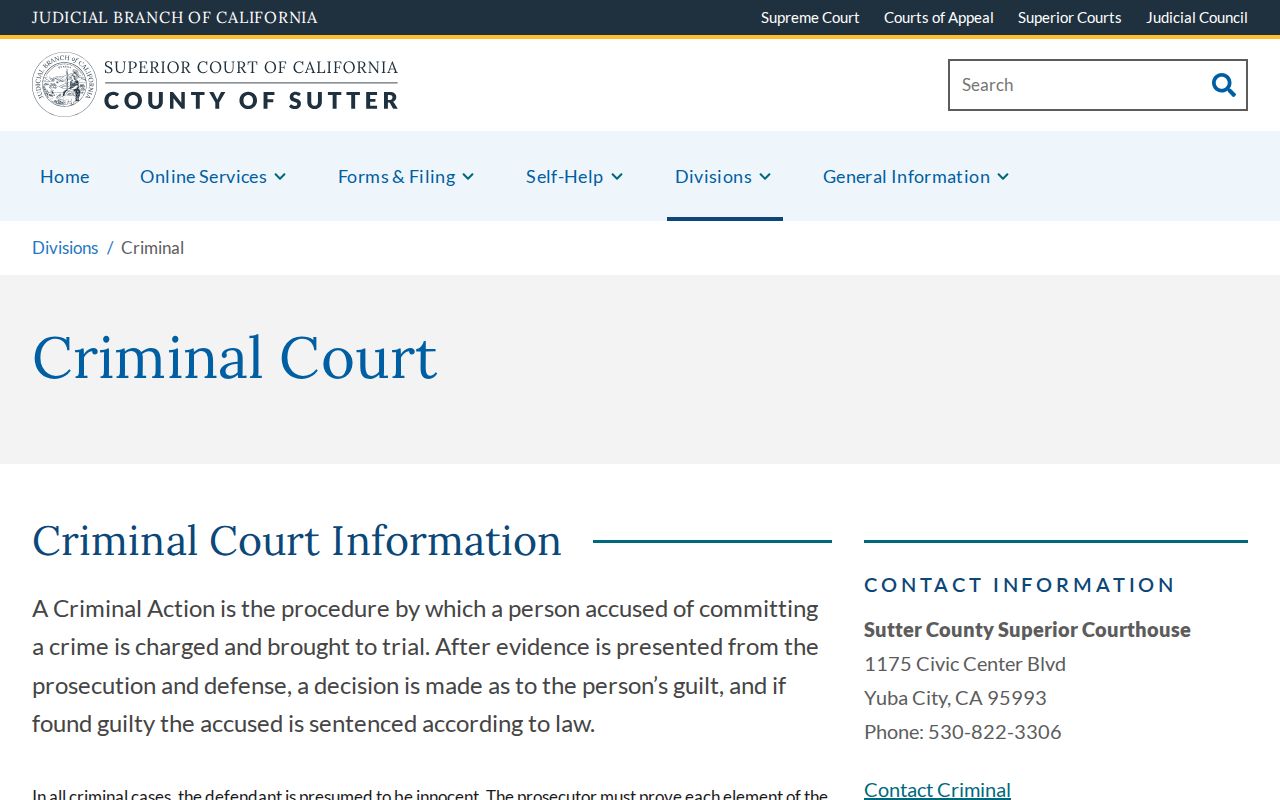
It anchors Sutter County criminal record questions in the court rather than the county clerk-recorder or jail.
Reading Sutter Criminal Case Outcomes
Several short terms carry much of a docket's meaning. Read the charge result, not just the first allegation. California also allows some offenses known as wobblers to be treated as either a felony or misdemeanor under the conditions in Penal Code section 17, so classification can change as the Sutter County case moves.
- Arraignment
- The first court stage where charges and rights are addressed and a plea may be entered.
- Plea
- The formal answer to a charge, such as guilty, not guilty, or no contest.
- Disposition
- The result of a charge, including conviction, dismissal, acquittal, or another court outcome.
- Dismissal
- A charge ending without conviction on that count, or later statutory relief in some cases.
- Sentence
- The custody, supervision, financial, and other terms ordered after conviction.
Access & Restrictions
Sutter Superior Court says most court records are open, but some are sealed or confidential. Juvenile delinquency files are generally restricted. Victim information and other protected data may be removed from a public view. The Press and Media page also makes a key distinction: its Press Review Tool concerns media access to e-filed material that may not yet have been reviewed and accepted as an official filing. It is not the same product as ordinary public case access.
California's Public Records Act does not make every justice record public without limit. If a Sutter County criminal case is absent, ask the court clerk whether the issue is age, indexing, confidentiality, or sealing. Do not assume that no search result means no case ever existed.